
Understanding Absolute Pull Range (APR)
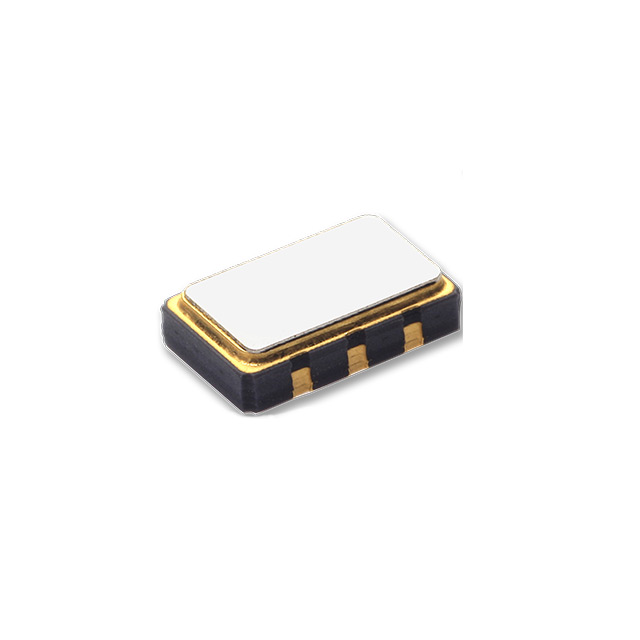
A Q&A Guide for VCXO Designers
Designers selecting VCXOs for PLL-based systems often face a frustrating problem: datasheets don’t all speak the same language. Terms like Absolute Pull Range, Total Pull Range, and Total Pullability get tossed around, sometimes interchangeably, sometimes not.
The result? Confusion, miscalculations, and real risk of selecting an oscillator that cannot lock to its reference under worst-case conditions.
This Q&A-style guide breaks down what APR really means, how it differs from Total Pull Range, and why it matters for system reliability.
Take a look at our Absolute Pull Range Tech Brief
Q: What exactly is a VCXO, and why does tuning range matter?
A Voltage-Controlled Crystal Oscillator (VCXO) is a crystal-based oscillator whose output frequency can be finely adjusted using an applied control voltage.This voltage alters the capacitance of a varactor diode, slightly shifting the crystal’s resonant frequency. This small but precise tuning range allows the VCXO to “pull” its output frequency higher or lower.
VCXOs are widely used in PLL (Phase-Locked Loop) systems, where the VCXO must continuously adjust to track a reference frequency. If the VCXO cannot tune far enough, the PLL can lose lock - a critical failure in communication, networking, timing, and RF systems.
Q: Why is there confusion around pull range specifications?
Because manufacturers don’t all define tuning range the same way.
Some use:
· Absolute Pull Range (APR)
· Total Pull Range
· Total Pullability
While related, these terms are not equivalent. They each define a different methodology for specifying a VCXOs tuning range. If a designer assumes Total Pull Range equals usable tuning range, the VCXO may be underspecified, and the system may fail to lock under real conditions.
Q: So what does Absolute Pull Range (APR) really measure?
APR represents the usable, guaranteed tuning range of the VCXO after subtracting all worst-case internal frequency errors.
Mathematically:
APR = Total Pull Range − (Combined Worst-Case Frequency Errors)
These errors include:
· Initial frequency tolerance
· Temperature variation
· Aging (time drift)
· Supply voltage sensitivity
· Load sensitivity
APR refers to the minimum guaranteed frequency deviation a VCXO can achieve from its nominal frequency across its full control voltage range.
APR = Total Pull Range − (Combined Worst-Case Frequency Errors)
Because Total Pull Range defines only how much range a VCXO has, while APR lets the designer know whether or not a VCXO is suitable for his application. For designers building PLLs, APR is what determines whether the VCXO can reliably track the reference frequency.
Q: Can you show an example of why APR matters?
Absolutely. Consider this scenario:
A VCXO must track an input reference that can vary by ±40 ppm.
The VCXO’s datasheet lists:
· Initial tolerance: ±20 ppm
· Temperature stability: ±30 ppm
· Aging: ±10 ppm
· Supply voltage sensitivity: ±5 ppm
· Load sensitivity: ±5 ppm
These internal errors total: ±70 ppm
The VCXO’s Total Pull Range is listed as: ±100 ppm
Q: Is ±100 ppm enough?
It might appear so, but only if you ignore the internal errors.
After subtracting the ±70 ppm of internal variations, the usable range left is:
±100 ppm − ±70 ppm = ±30 ppm
This is not enough to track the reference’s ±40 ppm variation.
Q: Why is there confusion around pull range specifications?
Because manufacturers don’t all define tuning range the same way.
Some use:
· Absolute Pull Range (APR)
· Total Pull Range
· Total Pullability
While related, these terms are not equivalent. They each define a different methodology for specifying a VCXOs tuning range. If a designer assumes Total Pull Range equals usable tuning range, the VCXO may be underspecified, and the system may fail to lock under real conditions.

About CTS
CTS (NYSE: CTS) is a leading designer and manufacturer of products that Sense, Connect, and Move.
The company manufactures sensors, actuators, and electronic components in North America, Europe, and Asia. CTS provides solutions to OEMs in the aerospace, communications, defense, industrial, information technology, medical, and transportation markets.
For more information on CTS Corporation, please visit www.ctscorp.com.
Media Relations
E-mail: marketing@ctscorp.com
Lisle, IL 60532
USA
###